SICK ZL1-F2800S07 Photoelectric Sensor 1045508
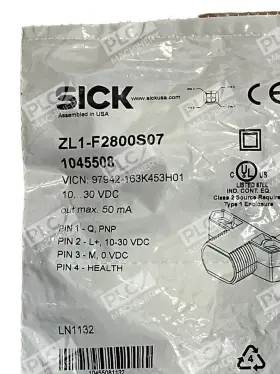
( Brand: Sick ), ( Manufacturer Part Number: ZL1-F2800S07 ), ( Type: 1045508 )
Review SICK Photoelectric Sensor
The Sick ZL1-F2800S07 photoelectric sensor is a versatile and reliable device designed for various industrial automation applications. This sensor features a fiber optic design, making it suitable for use in harsh environments where traditional photoelectric sensors may not perform optimally.
The ZL1-F2800S07 sensor operates on the principle of the reflected light sensor with background suppression technology. It is capable of reliably detecting objects that are black, dark gray, or shiny, regardless of their color. This makes it ideal for applications where the target object may vary in color or reflectivity.
The sensor's housing is made of high-quality, impact-resistant polyamide material, ensuring durability and long service life. It is also designed with IP67 protection rating, making it suitable for use in wet and dusty environments.
The sensor has an adjustable sensitivity range, allowing it to be used in applications with varying target sizes or distances. It also features adjustable time delay and pulse output options, providing flexibility to meet specific application requirements.
The ZL1-F2800S07 sensor is easy to install and integrate into automation systems. It comes with a M12 x 1 connector and can be connected to various control devices using a variety of communication protocols, including Analog 4-20mA, NPN/PNP, and SICK SafetyBus.
The sensor's diagnostics function allows for easy monitoring of its status and performance. It also features a self-test function, ensuring reliable operation and minimizing downtime.
In summary, the Sick ZL1-F2800S07 photoelectric sensor is a high-performance and versatile device suitable for use in a wide range of industrial automation applications. Its fiber optic design, adjustable sensitivity, and robust housing make it ideal for use in harsh environments, while its easy installation and integration make it a popular choice among automation professionals.
Pros and Cons of Buying a Sick ZL1-F2800S07 Photoelectric Sensor
The Sick ZL1-F2800S07 photoelectric sensor is a popular choice for various industrial automation applications due to its advanced features and capabilities. However, like any other technology investment, it's essential to weigh the potential benefits against the costs and limitations. In this analysis, we'll discuss the pros and cons of purchasing a Sick ZL1-F2800S07 photoelectric sensor.
Pros:1. High Precision: The Sick ZL1-F2800S07 sensor offers high precision, with a measuring range of up to 28 meters and a resolution of 1mm. This makes it an ideal choice for applications requiring accurate distance measurement.
2. Versatile: The sensor can be used in various applications, including presence detection, object detection, and distance measurement. Its adjustable sensing range makes it suitable for a wide range of industrial environments.
3. Robust Design: The sensor is designed for harsh industrial environments, with an IP67 protection rating and a rugged housing that can withstand impacts and vibrations.
4. Easy to Install and Configure: The sensor comes with intuitive software that simplifies installation and configuration. It also supports various communication protocols, such as PROFIBUS, PROFINET, and EtherNet/IP, making it easy to integrate with existing industrial control systems.
5. Long Operating Life: The sensor's long operating life, up to 10 years, reduces the need for frequent replacements, saving time and money in the long run.
Cons:1. Cost: The Sick ZL1-F2800S07 photoelectric sensor is more expensive than some other sensors in the market. The investment in this sensor may be significant for small businesses or projects with limited budgets.
2. Complexity: The sensor's advanced features and capabilities can make it more complex to install and configure compared to simpler sensors. This may require additional time and resources for training and implementation.
3. Limited Applications: Although the sensor is versatile, it may not be suitable for all applications. For example, it may not perform optimally in applications with extreme temperatures or high levels of electromagnetic interference.
Conclusion:The Sick ZL1-F2800S07 photoelectric sensor offers several advantages, including high precision, versatility, robust design, ease of installation, and long operating life. However, the investment required for this sensor may be a significant consideration for some buyers. The complexity of the sensor and its limited applications in certain environments are also factors to consider. Ultimately, the decision to purchase a Sick ZL1-F2800S07 photoelectric sensor depends on the specific requirements of the application and the resources available for implementation. If precision, versatility, and a long-term investment are priorities, this sensor may be an excellent choice. However, if cost and simplicity are the primary concerns, other options may be more suitable.
Details:
With its advanced technology and precision engineering, this sensor is ideal for use in a wide range of applications, including home surveillance consumer electronics. The sensor features a high-quality construction and is designed to be easy use install. This photoelectric sensor from SICK is a top-of-the-line product that will provide you with reliable and accurate performance.
part #: zl1f2800s07 prices
- $17.23-$75.00
specifications secimotions:
- brand: Sick
- mpn: Zl1-f2800s07
- type: 1045508
returns secimotions:
- policy: Returns Accepted
- method: Money back
- time: 30 Days
- paid by: Buyer
offer secimotions:
- started: September 22, 2025
- best offers: True
- sold: 0
- availability: In Stock
- quantity: 3
- options: Ship-to-home
seller secimotions:
- # reviews: 714
- city: Buda, Texas
- rating: 100.0%
payments secimotions:
- credit card: Mastercard
- other
- wallet: Google-pay
shipping secimotions:
- cost: $0.00
- type: Fixed
- transit: 4-10 Days
- carrier: USPS
- service: USPS Ground Advantage
- class: Standard
general secimotions:
- Surveillance Smart Home Electronics > Home Surveillance > Sensors Motion Detectors
- condition: New
Sick ZL1-F2800S07 Is Similar To:
- Sick 1045212 Et3-e3228 Photoelectric Proximity Switch (52.5% similar) Its compact design makes it easy to install and use, is suitable for both indoor outdoor use. This Sick ET3-E3228 1045212 photoelectric proximity switch is a highly reliable and precise sensor that can be used in variety of applications. It is designed to detect objects and measure distances...(September 22nd, 2025)
- Sick Kt5g2n1111s16 1pcs New Kt5g-2n1111s16 Color Mark Sensor (35.8% similar) Parameter: value: rated collector - emitter voltage vices 600 v, current ic 400 a, circuit topology 2 unit half bridge structure LGBT module...(November 14th, 2025)
